



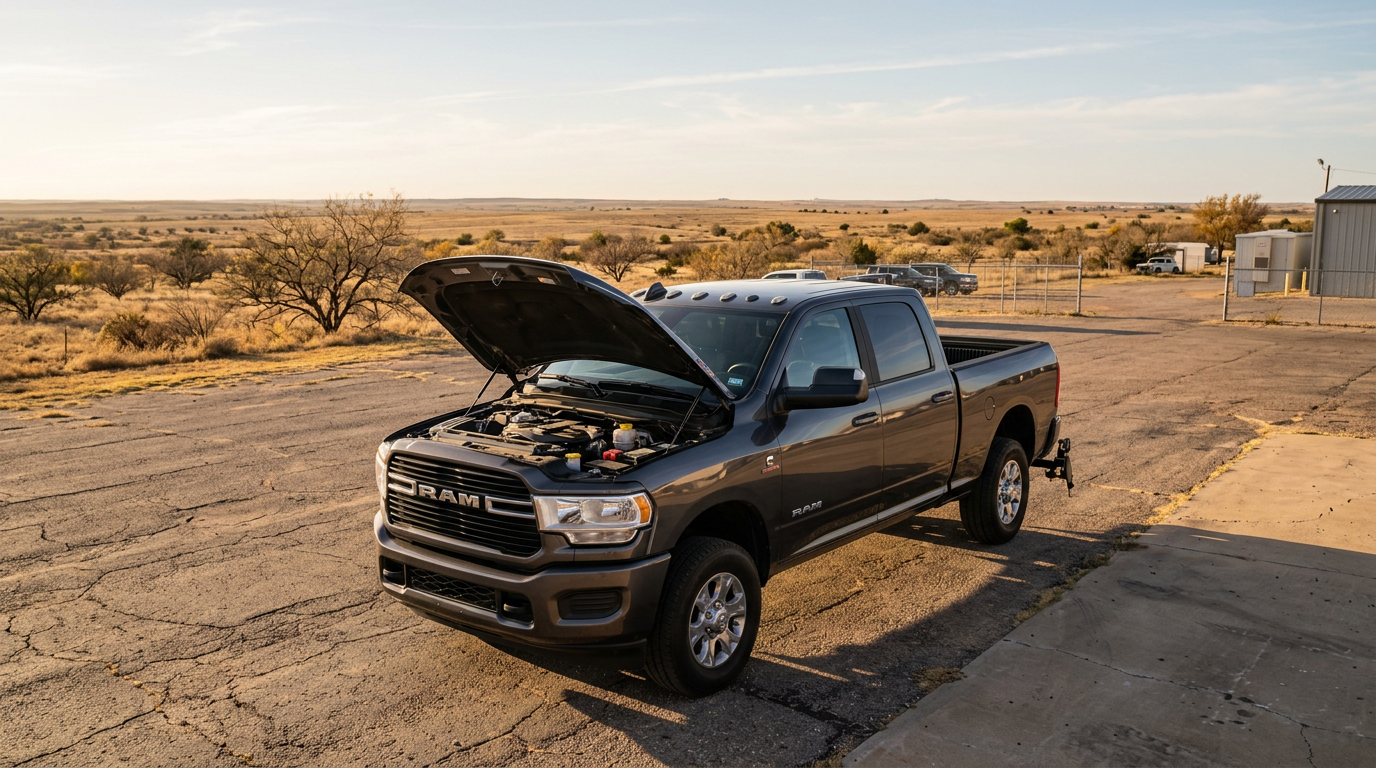
Today, we sit down with our Sales Manager at Blake Fulenwider Chrysler Dodge Jeep of Clyde, who brings over a decade of heavy-duty truck experience to share how our dealership inspects and prepares pre-owned diesel pickups. In this expert Q&A, you will learn the key mechanical checks, transmission comparisons, and engine diagnostics that protect your investment when buying a used Ram heavy-duty truck.
Q: Why did the Bosch CP4 fuel pump fail on Ram 6.7 Cummins diesels?
A: The Bosch CP4 fuel pump failed on 2019 through 2020 Ram 6.7 Cummins diesels primarily because American ultra-low sulfur diesel fuel provides significantly less lubrication than European diesel fuel, causing internal metal-on-metal friction that degraded the pump's roller bucket assemblies. As those internal components ground together, fine metal shavings circulated through the entire high-pressure fuel system, destroying the fuel rails, high-pressure lines, and fuel injectors. Chrysler addressed this issue through voluntary safety recalls that replaced the problematic CP4 pump with the proven Bosch CP3 fuel pump or an updated high-pressure fuel system assembly.
Evaluating high-pressure fuel system integrity and verifying completed recall work is our top priority when evaluating pre-owned inventory. When evaluating a diesel truck for our lot, our service department cross-references the vehicle identification number to confirm whether factory recall repairs were performed. If you have questions about the service background or open safety campaign status on a pre-owned truck, give our service team a quick call to check the official vehicle history.
Q: How do you check a used Ram diesel for engine blow-by before buying?
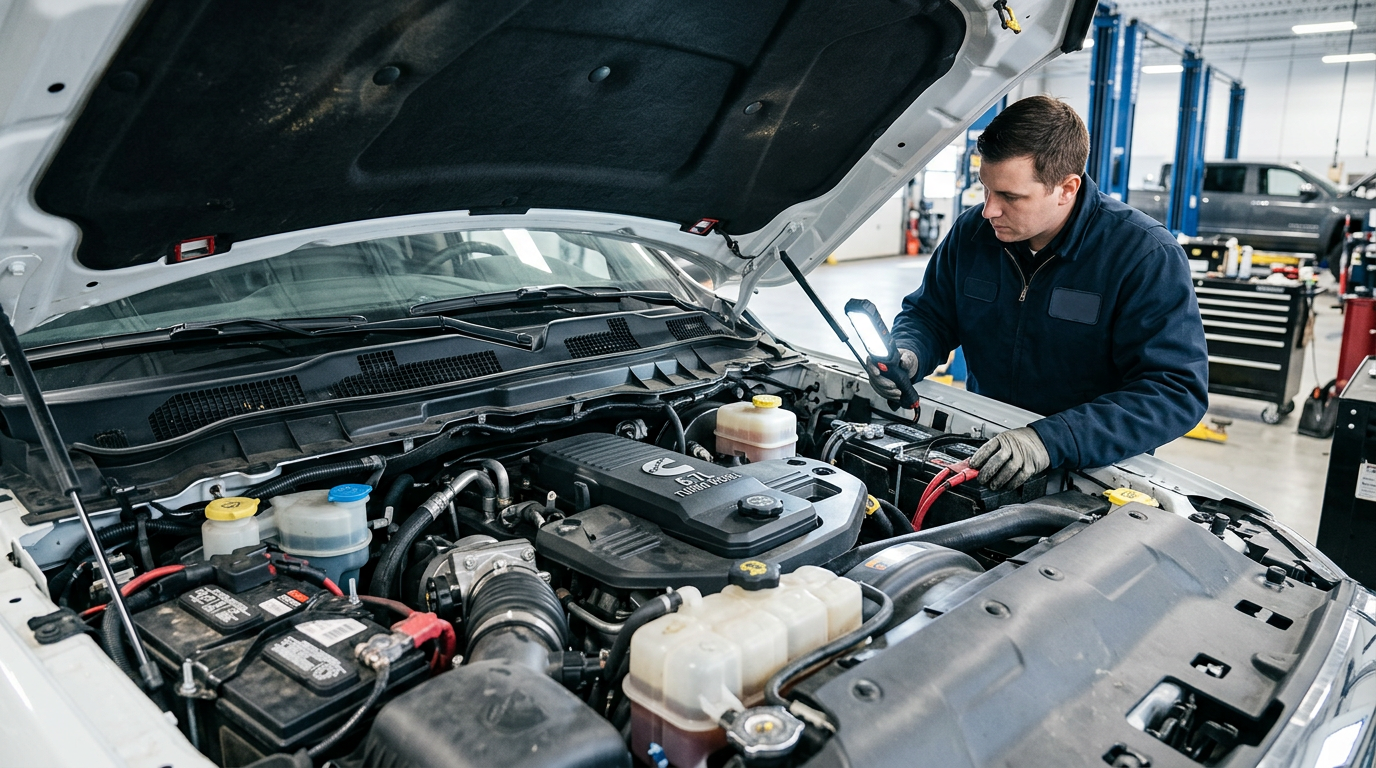
A: Checking a used Ram for engine blow-by requires bringing the 6.7L Cummins engine up to full operating temperature, loosening the oil filler cap while idling, and turning the cap upside down directly over the oil fill neck. On an engine with healthy compression, the cap will rest steadily or vibrate slightly from light engine vibration. If excessive crankcase pressure blows the cap off the neck or releases thick, dark smoke, combustion gases are leaking past worn piston rings or cylinder walls into the crankcase.
During our pre-lot mechanical evaluation, our certified technicians also inspect the Crankcase Ventilation filter before declaring severe engine wear. A clogged CCV filter traps normal crankcase pressure and produces symptoms that closely mimic piston ring blow-by. Distinguishing between a routine maintenance item like a saturated filter element and true internal mechanical cylinder scoring ensures that every truck we offer meets our rigorous engine standards.
Q: What are the signs of a failing turbocharger on a 6.7 Cummins?
A: Common indicators of a failing turbocharger on a 6.7-liter High-Output Cummins engine include delayed boost response, high-pitched whining or grinding noises under load, and excessive black or blue exhaust smoke. Because these engines utilize a Variable Geometry Turbocharger equipped with an internal sliding nozzle, soot and carbon buildup can cause the actuator nozzle mechanism to stick over time. A sticking VGT nozzle results in severe turbo lag, reduced towing power, or diagnostic trouble codes related to boost pressure performance.
Our intake inspection process involves checking for oil accumulation inside the intercooler piping and measuring the turbocharger shaft for axial or radial play. Excessive shaft movement allows the compressor wheel to contact the outer housing, generating microscopic metal debris that threatens severe engine damage if ingested. Catching mechanical turbocharger wear early ensures long-term reliability for heavy hauling.
Q: What is the difference between 68RFE and Aisin transmissions in used Ram diesels?
A: The primary difference between these two six-speed automatic gearboxes stems from their mechanical design, internal casing strength, and maximum torque ratings. The 68RFE automatic transmission is a Chrysler-designed unit paired with standard-output Cummins engines, handling up to 850 lb-ft of torque. The Aisin AS69RC six-speed automatic is a commercial-grade transmission available on High-Output Cummins models, built specifically to manage up to 1,075 lb-ft of torque.
"Matching the transmission to your actual towing routine is the single most important decision when picking a pre-owned heavy-duty diesel."
Beyond raw output numbers, the Aisin gearbox features a wider steel case, larger clutch friction plates, and heavy-duty cooling circuits engineered for continuous heavy hauling. While the 68RFE delivers smooth gear shifts for daily driving around Abilene, the Aisin transmission uses severe-duty gear sets designed to withstand continuous gooseneck and fifth-wheel trailering without overheating.
Q: Which transmission is better for heavy towing in a used Ram 3500?
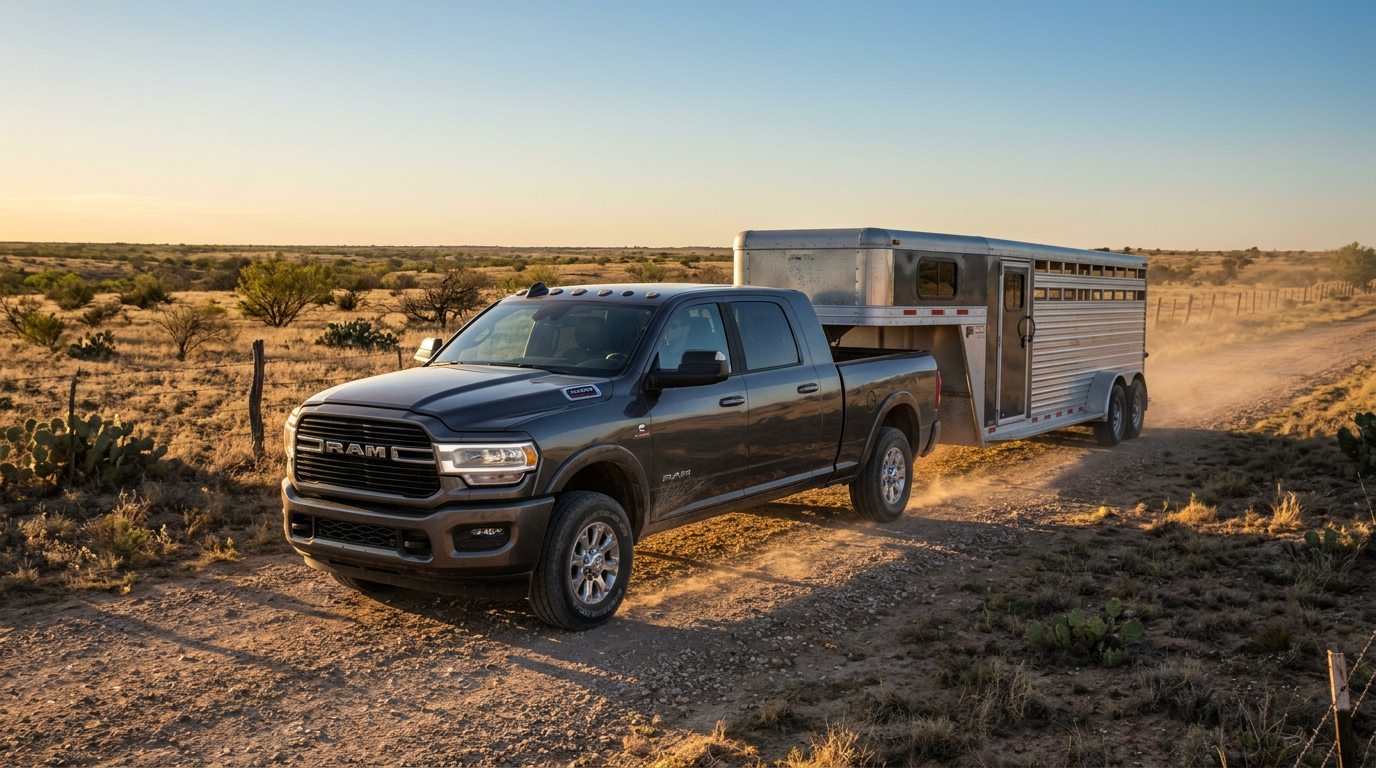
A: The Aisin AS69RC transmission is the superior choice for heavy-duty towing and severe commercial applications in a pre-owned Ram 3500. Featuring lower initial gear ratios and heavy-duty internal clutch packs, the Aisin gearbox easily launches heavy trailering loads from a complete stop while maintaining lower fluid operating temperatures. For owners regularly pulling livestock trailers, heavy machinery, or large fifth-wheel campers across West Texas, its commercial construction offers maximum durability.
For drivers who only pull moderate loads or use their pickup primarily as a personal vehicle, a Ram 3500 equipped with the 68RFE transmission remains a comfortable and capable alternative. Our sales team evaluates each buyer's intended trailering weight against the vehicle door-jamb payload label and factory axle ratios to ensure the selected drivetrain matches their real-world needs.
Q: How much payload capacity is lost when choosing the diesel engine in a Ram 2500?
A: Opting for the 6.7L Cummins diesel engine in a Ram 2500 reduces available payload capacity by roughly 800 pounds compared to the standard 6.4-liter gas V8. Because three-quarter-ton pickups operate under a rigid 10,000-pound Gross Vehicle Weight Rating class limit, the extra physical weight of the cast-iron diesel engine block directly decreases the remaining weight capacity available for bed cargo and tongue weight.
Depending on cab configuration and luxury trim level, a diesel Ram 2500 Tradesman or Laramie generally yields a net payload capacity between 2,000 and 3,100 pounds. Buyers who require maximum cargo hauling in the truck bed alongside diesel pulling power often benefit from stepping up to a Ram 3500, where leaf-spring rear suspension options and higher factory GVWR allowances provide up to 6,050 pounds of payload capacity.
Q: What mileage is considered high for a 6.7 Cummins engine?
A: The 6.7-liter High-Output Cummins engine features a B50 design life rating of 350,000 miles, meaning half of these inline-six engines reach that milestone before requiring a major overhaul. As a result, a well-maintained truck with 150,000 miles is considered mid-life rather than high-mileage, assuming regular oil changes, fuel filter replacements, and cooling system maintenance were performed on schedule.
During our pre-lot appraisal process, our dealership evaluates maintenance history, total engine idle hours, and transmission service intervals rather than judging a truck solely by its odometer reading. A highway-driven Ram diesel with 175,000 miles and complete maintenance records often represents a stronger long-term value than a low-mileage truck that suffered from extended idling and missed service windows. To inspect our pre-owned heavy-duty truck inventory in person, visit our showroom address in Clyde or contact our staff to schedule a thorough test drive.
© 2026 Blake Fulenwider Chrysler Dodge Jeep of Clyde. All rights reserved.