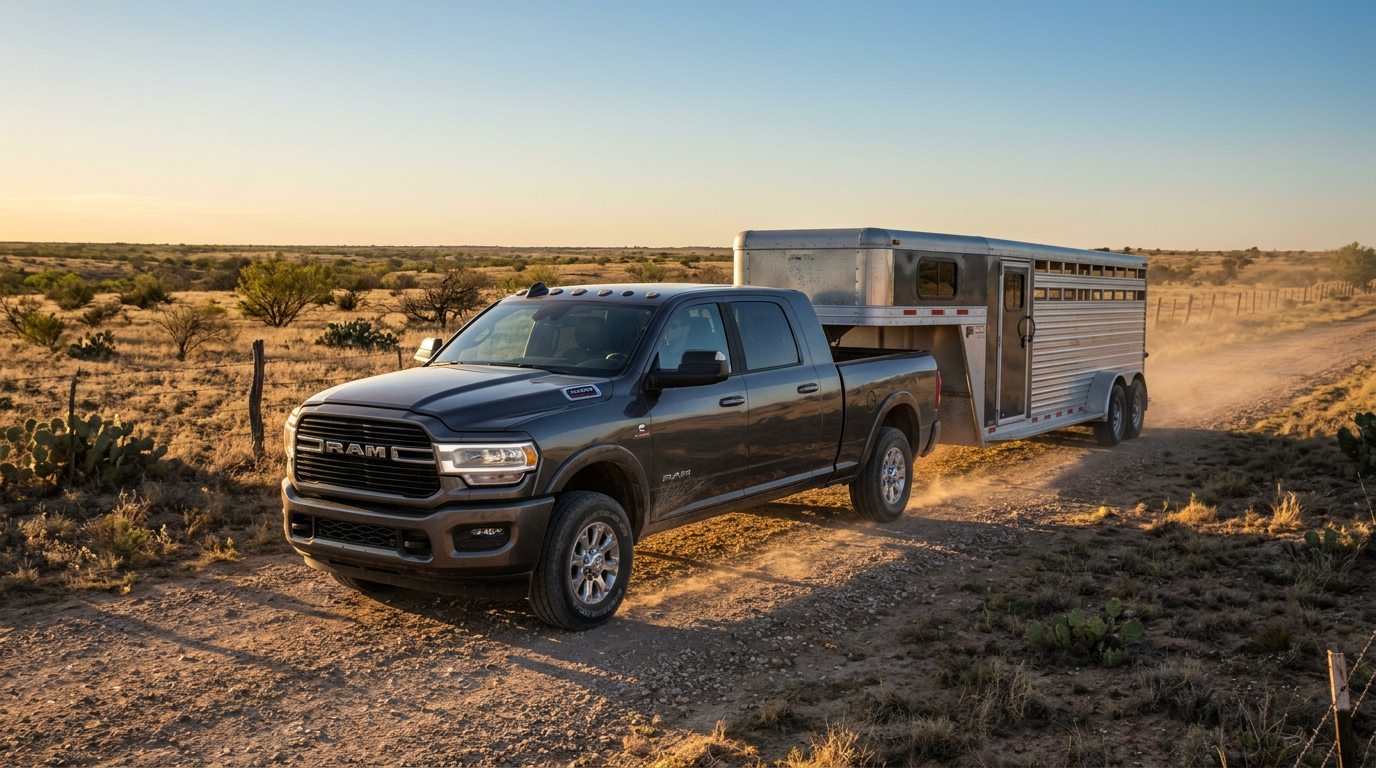





What Maintenance Does a Ram Cummins Diesel Engine Need Before Winter?
Before winter arrives, a Ram Heavy-Duty truck powered by a Cummins diesel engine requires a focused multi-point service covering fuel filters, the fuel-water separator, dual battery health, coolant freeze protection, and engine block heater operation. Ensuring clean fuel flow and maximum electrical cranking capacity prevents fuel gelling, frozen condensation, and cold-start failures when ambient temperatures drop below freezing.
As a Service Technician at Blake Fulenwider Chrysler Dodge Jeep of Clyde with over 10 years of experience servicing heavy-duty trucks, I see firsthand how cold weather tests every mechanical system on a diesel pickup. Heavy-duty diesel engines operate under high compression and rely on precise fuel atomization, making seasonal maintenance vital before cold snaps arrive. Ranches and open farmland across Clyde depend on uninterrupted truck performance for daily towing and equipment transport, where a single non-start in freezing weather can halt an entire morning's work.
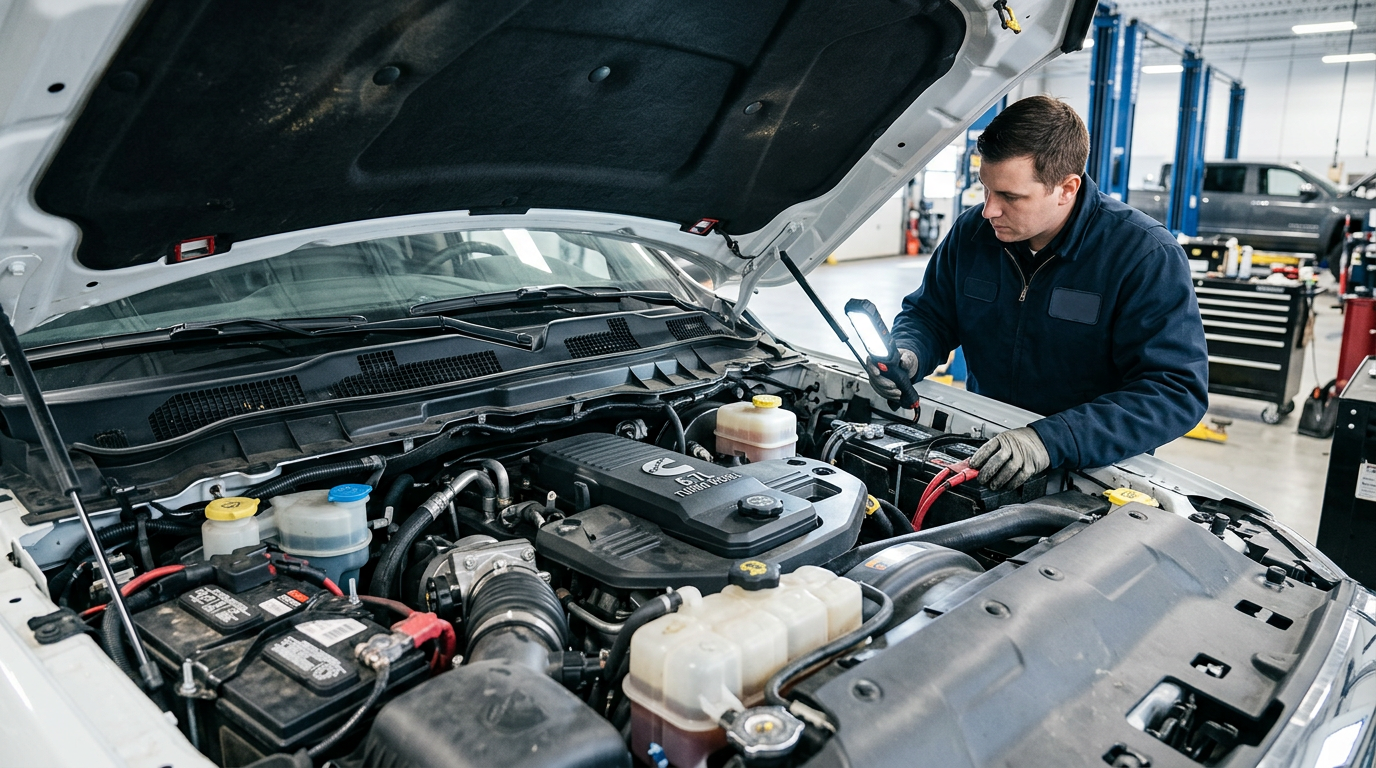
A complete pre-winter service addresses the specific vulnerabilities of diesel powertrains in cold weather. Our service team inspects the High-Output 6.7-liter Cummins Turbo Diesel I6, checks for stored fault codes, and evaluates the condition of all major operating fluids. We verify that the 50/50 organic additive technology (OAT) coolant provides freeze protection down to -34°F, inspect the serpentine belt and cooling hoses for cold-weather brittleness, and test the operation of the integrated 12-volt filter heater.
Skipping pre-winter preparation often leads to avoidable roadside breakdowns caused by wax-plugged fuel filters or discharged batteries. Truck owners can schedule an inspection at our service center on North Access Road or reach our service department directly by calling (325) 893-1416 to ensure their truck is fully prepared for cold weather driving.
Table of Contents
- What Fuel-System and Water-Separator Maintenance Keeps Your Cummins Running in Cold Weather?
- Why Do Ram Heavy-Duty Cummins Trucks Rely on Dual Batteries and Grid Heaters?
- At What Temperature Should You Plug In Your Ram Cummins Engine Block Heater?
- Does DEF Freeze in Ram Cummins Trucks and Will It Cause Engine Damage?
- How Our Technicians Inspect and Prepare Ram Cummins Trucks for Winter Work
What Fuel-System and Water-Separator Maintenance Keeps Your Cummins Running in Cold Weather?
Servicing the fuel system before winter requires replacing both primary and secondary fuel filters every 15,000 miles or annually, draining trapped moisture from the fuel-water separator, and treating diesel fuel with high-quality anti-gel additives before ambient temperatures fall below freezing. Cold diesel fuel undergoes a physical change as temperature drops, causing paraffin wax to form crystals that quickly clog fuel filter media.
Standard #2 diesel reaches its cloud point around 32°F, where wax crystals begin to solidify and turn the fuel cloudy. As temperatures drop toward the cold filter plugging point between 10°F and 15°F, these wax crystals clump together, choking off fuel flow to the high-pressure injection pump. Adding a winter anti-gel treatment before fueling alters how wax crystals solidify, keeping them dispersed so fuel passes freely through the filter elements. Maintaining a fuel tank at least half full also minimizes empty air space inside the tank, reducing condensation formation during sudden temperature swings.
Water contamination poses an immediate risk to high-pressure common-rail diesel injection systems. Suspended water in fuel freezes at 32°F, forming ice crystals that mimic fuel gelling symptoms and cause severe abrasive wear on expensive fuel injectors and fuel pumps. Ram Cummins diesel trucks feature a dedicated fuel-water separator equipped with a sensor that alerts the driver via a dashboard warning light when moisture builds up in the collection bowl. Technicians open the drain valve during routine service to purge collected water until clean diesel emerges, ensuring the fuel supply remains dry and free of ice during hard freezes.
Why Do Ram Heavy-Duty Cummins Trucks Rely on Dual Batteries and Grid Heaters?
Ram Heavy-Duty Cummins trucks utilize two 12-volt batteries wired in parallel to supply double the cold cranking amperage needed to turn over a heavy-duty inline-six engine with thick cold oil while simultaneously energizing the high-draw intake air grid heater. Cold weather slows the chemical reactions inside lead-acid batteries, cutting available cranking power by up to half at freezing temperatures just as the engine requires maximum torque to rotate.
Unlike light-duty gasoline engines or diesels equipped with individual cylinder glow plugs, the 6.7-liter Cummins utilizes an electrical intake air grid heater located inside the intake manifold. When the driver turns the ignition key, the grid heater draws heavy electrical current to warm incoming intake air before cranking, ensuring that compressed air inside the cylinders reaches ignition temperature. The Wait to Start indicator light on the instrument cluster signals when the grid heater cycle is complete, and starting the engine before the light turns off leads to extended cranking times, white exhaust smoke, and unnecessary electrical strain.
Because the dual batteries operate in parallel, a single weak or degraded cell in one battery continuously drains electrical energy from the stronger unit. During a pre-winter battery inspection, technicians disconnect the batteries to conduct individual load tests, clean terminal connections of oxidation, and verify that the alternator output meets factory specifications. Replacing aging batteries in matched pairs ensures consistent cranking speed and reliable grid heater performance on cold mornings.
At What Temperature Should You Plug In Your Ram Cummins Engine Block Heater?
Plugging in the engine block heater on a Ram Cummins truck is recommended whenever ambient temperatures drop below 30°F to ease engine starting and accelerate cabin warm-up time, and it becomes mandatory when temperatures drop below 0°F. The factory block heater consists of an electrical resistance heating element installed directly into the engine water jacket, transferring heat into the engine coolant and block casting.
Warming the engine block reduces internal drag caused by chilled engine oil, protecting critical bearings, crankshaft journals, and cylinder walls during initial oil circulation. Pre-heating the coolant also decreases the operational time required for the intake air grid heater, reducing startup drain on the dual battery system. When drivers ask me how long to run the block heater, I recommend using a simple outdoor outlet timer set for two hours before their scheduled morning startup rather than leaving the unit plugged in all night, which saves electricity while delivering full pre-heating benefits.
Prior to winter, technicians visually inspect the block heater cord for cracked insulation, frayed wires, or corroded electrical plug prongs that could cause short circuits. Electrical resistance across the plug terminals is measured with a multimeter to confirm that the heating element maintains proper resistance values between 10 and 30 ohms. Checking the cord routing keeps wiring safely clear of hot exhaust manifolds and moving serpentine belts.
Does DEF Freeze in Ram Cummins Trucks and Will It Cause Engine Damage?
Diesel Exhaust Fluid (DEF) freezes at approximately 12°F, but this freezing process does not damage the engine or emissions system because Ram Cummins trucks are engineered with integrated tank heaters and flexible fluid lines designed to accommodate fluid expansion safely. DEF is composed of 32.5% high-purity synthetic urea and 67.5% deionized water, causing it to freeze and expand by roughly 7% in a manner similar to pure water.
When a Ram Heavy-Duty truck sits idle in sub-freezing temperatures, the DEF inside the storage tank solidifies without altering its chemical composition or effectiveness. Upon starting the truck, an automated electrical heating element inside the DEF tank and delivery lines thaws the fluid, allowing the Selective Catalytic Reduction (SCR) system to resume normal operation once operating temperatures are reached. Engine control software manages this thawing cycle automatically without triggering error codes or engine derate conditions.
Adding anti-gel formulas, alcohol, or aftermarket additives to the DEF tank will permanently ruin the chemical purity of the fluid and cause severe damage to the SCR catalyst and dosing injectors. Maintaining high-quality fluid that meets ISO 22241 standards ensures proper emissions performance. Leaving small air expansion gaps at the top of bulk DEF storage jugs prevents container ruptures when extra fluid is stored in unheated workshops or truck beds during winter.
How Our Technicians Inspect and Prepare Ram Cummins Trucks for Winter Work
Preparing a heavy-duty pickup for harsh winter conditions involves a meticulous inspection of the High-Output 6.7-liter Cummins Turbo Diesel I6, the TorqueFlite HD eight-speed automatic transmission, transfer case fluid, differential lubricants, and braking components. Heavy haulers traveling commercial routes near Abilene require complete drivetrain dependability when pulling payloads up to 20,000 lb over icy grades and slick road surfaces.
Our pre-winter maintenance protocol covers critical mechanical and safety evaluations:
- Testing dual batteries with a digital conductance tester to verify cold cranking amp capacity and charging system voltage regulator output.
- Replacing primary chassis-mounted and engine-mounted fuel filters with genuine OEM filtration media rated for high water separation.
- Inspecting the block heater element cord, verifying heating grid draw, and testing coolant freeze protection levels.
- Checking transmission fluid condition, transfer case engagement, front hub operation, and four-wheel-drive actuation.
- Examining winter tire tread depth, verifying tire pressure monitoring system sensors, and setting cold inflation pressures.
Regular winter maintenance protects the long-term durability of your truck and preserves coverage under the 10-Year/100,000-Mile Limited Powertrain Warranty. Driver safety and vehicle longevity depend on proactive care before severe weather strikes. To prepare your heavy-duty pickup for the season ahead, give our team a call at (325) 893-1416 or follow directions to Blake Fulenwider Chrysler Dodge Jeep of Clyde to schedule a comprehensive Cummins winter service inspection today.
© 2026 Blake Fulenwider Chrysler Dodge Jeep of Clyde. All rights reserved.